Macro Cycle
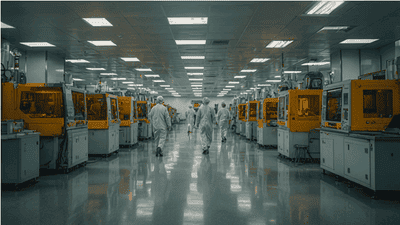
OpenAI’s $73B Valuation and TSMC Self-Designed Chip: A New AI Vertical Integration Era
OpenAI’s move into custom silicon signals a new phase of AI integration: model developers increasingly want influence over the hardware that determines their costs, capacity, and product performance. But this is integration through partnerships, not a plan to own every layer of semiconductor manufacturing.
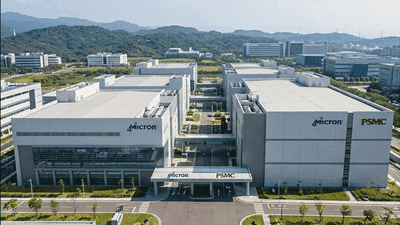
Micron’s $1.8B PSMC Acquisition: Inside the Taiwan DRAM Capacity Land Grab
Micron’s $1.8 billion Taiwan deal is not an acquisition of PSMC itself. It is the purchase of PSMC’s P5 manufacturing site in Tongluo, Miaoli County—a transaction that gives Micron existing cleanroom infrastructure and a route to expand advanced DRAM production faster than starting entirely from scratch.
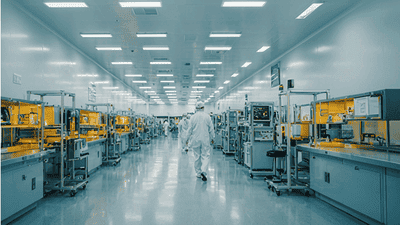
SK Hynix’s $15B Fab Bet: Why First Cleanroom Move-Up to February 2027 Matters
Three months can be a long time in memory manufacturing. Bringing a cleanroom forward from May to February 2027 gives SK hynix an earlier opportunity to install equipment, develop processes, and prepare capacity for customers. It does not guarantee three additional months of commercial shipments, but it can move the entire learning curve forward.

Japan’s Rapidus 2nm Pilot Line: Can Japan Reclaim Advanced Logic Leadership?
Japan can rebuild a position in advanced logic manufacturing. Whether Rapidus can turn that ambition into commercial leadership remains an open question—and the answer will depend on considerably more than transistor performance.

ASML’s High-NA EUV Partnership Trio: What Intel, Samsung, and TSMC Gain from the 2026 Deal
Intel gains an opportunity to turn early manufacturing experience into differentiation. Samsung gains a route toward more advanced DRAM production. TSMC gains a clearer long-term adoption path while preserving flexibility over when the technology enters its factories.

TSMC’s 2026 Equipment Procurement Raised to 1.9X: What It Signals for the Whole Supply Chain
TSMC’s equipment procurement signal points to something bigger than another strong quarter for chipmaking tools. It suggests that customer demand is forcing a rapid revision of manufacturing plans—and that the limiting factor is increasingly the supply chain’s ability to respond.
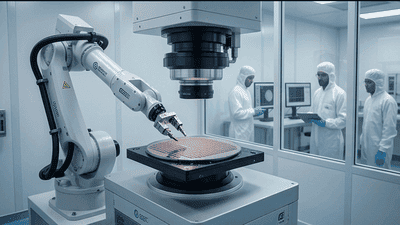
India’s Four Chip Fabs Going Live in 2026: Can 75% Local Production Become Reality?
India’s semiconductor manufacturing push is becoming operational, but the headline combines two claims that need separating. The four facilities originally expected to enter commercial production in 2026 were not four equivalent wafer fabs. And the government’s 70–75% ambition concerns the capability to design and manufacture chips for domestic applications—not proof that three-quarters of India’s semiconductor spending will soon become local factory revenue.

The HBM Pre-Sell Phenomenon: How SK Hynix Sold Out 2026 Capacity Before Year-End
Memory chips have traditionally been a business of uncomfortable surprises. Demand accelerates, manufacturers expand, inventories accumulate, and prices eventually fall. The technology changes; the cycle often feels familiar.
Samsung’s 471% Memory Revenue Surge: Decomposing the AI-Driven Earnings Explosion
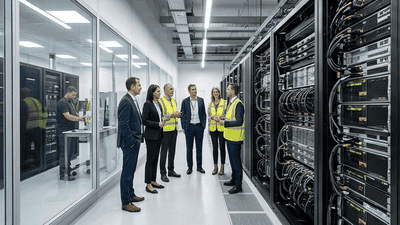
A 471% increase in memory revenue is not a routine cyclical rebound. It is a signal that pricing, product mix, and customer demand have moved together with unusual force. For Samsung, the headline captures something larger than a strong quarter: artificial intelligence is changing where the semiconductor industry earns its money—and who ultimately pays for that transformation.

Semi Inventory Days Drop Below 90, Restocking Cycle Officially Begins
When semiconductor industry inventory days fall below the 90-day threshold, it’s more than a statistic — it’s a signal. After several years of volatile demand, over-ordering, and aggressive destocking, the recent decline in inventory days below 90 indicates the broad channel, distributor, and supplier stock positions are lean enough to trigger a deliberate restocking cycle. For investors, OEMs, procurement teams, engineers, and policymakers, the implications are material: lead times will lengthen for constrained parts, prices may firm in select segments, and capacity planning will shift from defensive idling toward targeted expansion.